

First of all, congratulations. Getting that first signed contract is a massive milestone. You have done the hard work of lead generation, showing houses, and negotiating the deal. But as soon as the excitement wears off, the realization hits. Now you have to close the deal.
The period between a signed contract and a successful closing can feel like a blur of deadlines and confusing acronyms. Here are a few practical ways to get through your first escrow like you have closed a hundred of them.
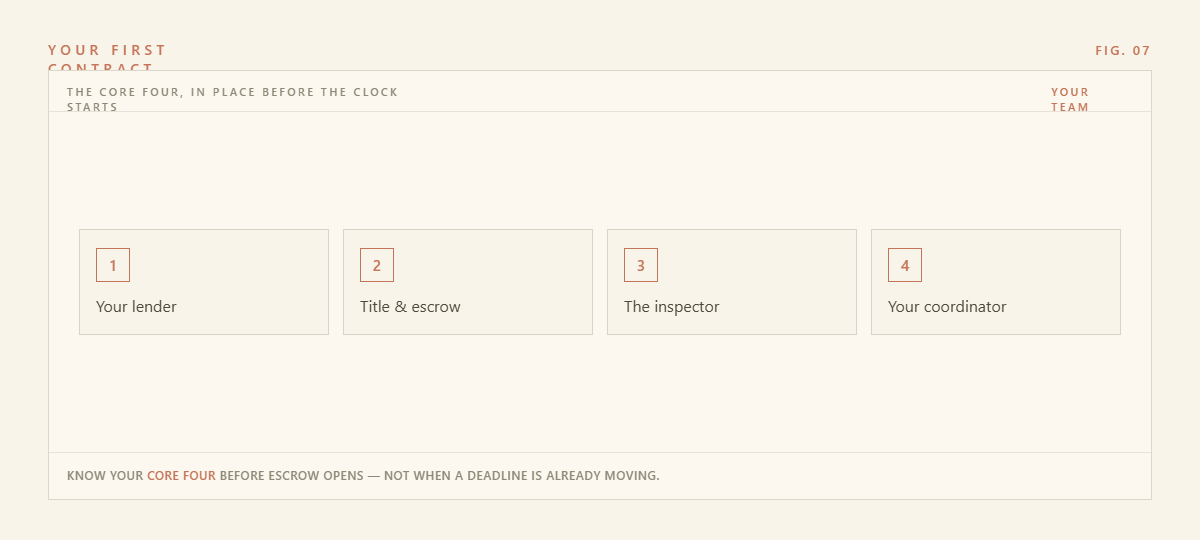
Build Your "Core Four" Team Before You Need Them
You need a reliable lender, a title officer, a home inspector, and a mentor or fellow agent you can call with a question. Before you get your first contract, reach out to these people. Ask them what they need from you to make a transaction smooth. When those relationships are established, you will feel much more confident calling them at 4:00 PM on a Friday.
The Over-Communication Rule
In your first few deals, you cannot do too much of it. A simple Friday Wrap-Up email every week goes a long way: here is where we stand, here is what is coming next, we are still on track. That one habit will save you from a dozen frantic phone calls and makes you look incredibly organized.
The "Accepted" text is the easy part. Here is a practical guide to navigating your first escrow like you have done it a hundred times.
Organize Your Digital Paperwork Every Single Day
Every time a document is signed, save it immediately to your cloud storage and name it clearly. Use a format like "Property Address - Document Name - Date." Waiting until the end of the week to organize means you will inevitably miss a signature or a disclosure.
Master the Clock
The moment the last person signs, several timelines start running simultaneously. In Idaho real estate, dates are everything. Create a master calendar on day one and share it with your clients. If tracking those deadlines is already pulling you away from finding your next client, that is exactly what a transaction coordinator is for. A TC acts as a second set of eyes to make sure none of those clocks run out on you.
Your value as an agent is in your ability to guide your clients through a stressful process. Set up these simple systems early, and you can stay focused on the relationship rather than the fine print. You only get one first closing, so make it a smooth one that leads to a glowing review and plenty of referrals.